
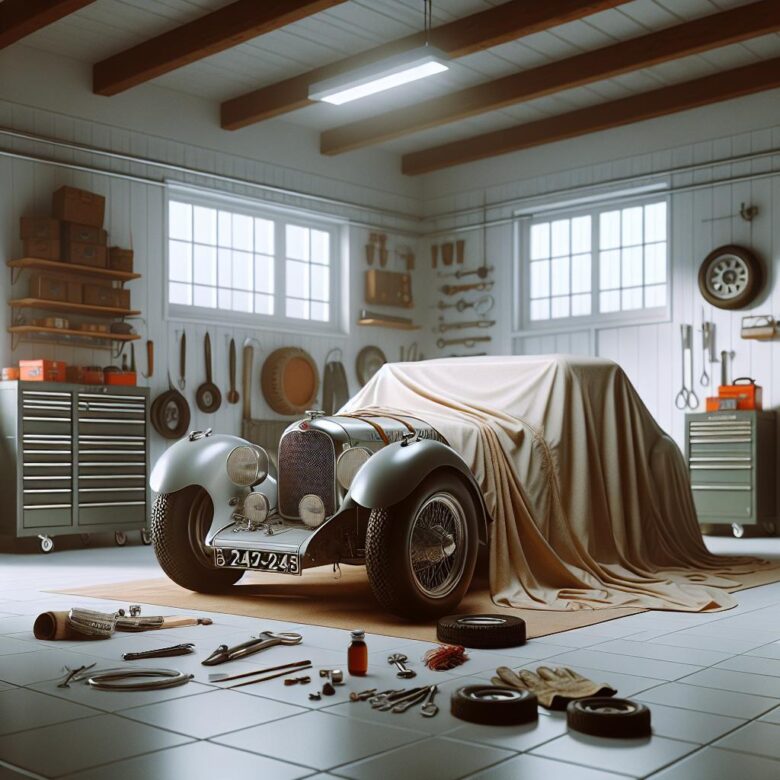
One winter can quietly ruin a vintage vehicle. I’ve seen flawless interiors ruined by trapped moisture, fuel systems varnished from stale gas, and rare trim lost to poor storage prep. Ignore the details now, and spring can bring costly repairs, lost originality, and avoidable depreciation.
From years of working around collector cars, one pattern is constant: winter damage usually comes from careless storage, not harsh weather alone. Temperature swings, weak battery care, bad tire support, and the wrong cover do more harm than most owners expect.
Below, I break down the exact steps to store a classic car properly-from cleaning, fluid prep, and fuel stabilization to battery maintenance, humidity control, and safe covering-so it comes out of winter dry, protected, and ready to start.
Winterizing a Vintage Vehicle: Step-by-Step Storage Prep to Protect Paint, Chrome, and Original Components
Most winter storage damage on vintage cars starts before the cover goes on: trapped moisture dulls lacquer, chloride residue blooms chrome pitting, and stale fuel varnishes carburetor passages in as little as 60-90 days. Prep must protect original finishes and aged materials without introducing silicone residues, overcharging, or flat-spotting period-correct tires.
- Wash the underbody, wheel housings, and brightwork with pH-neutral shampoo, then dry seams, drip rails, and trim joints with filtered air; apply a high-carnauba wax to paint and a non-abrasive chrome protectant to plated parts.
- Stabilize fresh fuel, bring the engine to operating temperature, fog cylinders if the car will sit more than four months, and verify coolant strength with a refractometer; for battery maintenance, use a smart charger with AGM/lead-acid mode rather than a constant trickle unit.
- Inflate tires to the upper safe limit on the sidewall or set the car on tire cradles, release the parking brake, chock the wheels, and map disconnected battery and accessory wiring in AutoCAD if the vehicle has owner-added period electronics or accessory cutoffs.
Field Note: I once traced springtime no-start and blistered bumper chrome on a stored ’66 Jaguar to two avoidable errors in November-fuel left untreated and a breathable cover installed over damp trim after an evening wash.
Battery Care, Fluid Stabilization, and Fuel System Protection: Expert Winter Storage Tips for Classic Cars
Most winter storage failures start with chemistry, not sheet metal: a lead-acid battery left below 12.4 volts sulfates quickly, ethanol-blended fuel absorbs moisture, and old coolant loses corrosion reserve while the car sits motionless for months. Disconnecting the battery is not enough; use a temperature-compensated maintainer, fill the tank to reduce condensation, and stabilize fuel before the final drive so treated fuel reaches the carburetor, pump, and lines.
| System | Recommended Winter Storage Practice |
|---|---|
| Battery | Clean terminals, verify electrolyte level on serviceable batteries, and keep state of charge with a smart maintainer such as CTEK MXS 5.0; avoid constant high-amperage trickle chargers that boil off electrolyte. |
| Fluids | Change contaminated oil before storage, confirm freeze protection and pH in coolant, and top off brake and clutch reservoirs only after checking for moisture or seepage at wheel cylinders and slave seals. |
| Fuel System | Add stabilizer at the correct treatment ratio, fill with fresh fuel, run the engine 10-15 minutes, and on carbureted cars inspect accelerator-pump diaphragms and needle-seat assemblies for varnish sensitivity. |
Field Note: I traced repeated spring no-start complaints on a stored 1967 MGB to a maintainer clipped to dirty ground points and untreated E10 fuel that had hardened the SU float-valve seals, a failure eliminated the next season with proper terminal prep and stabilized non-ethanol fuel.
Choosing the Right Indoor Storage Setup for a Vintage Car: Humidity Control, Tire Preservation, and Rodent Prevention
Most winter storage damage starts below 60°F with uncontrolled humidity, not mileage: once relative humidity drifts above 55%, corrosion accelerates on chrome, electrical contacts, and unfinished steel. A vintage car should be stored indoors at roughly 45-50% RH, on a clean vapor-resistant floor, with tire load reduced and every rodent access point treated as a failure point.
| Storage Factor | Target Setup | Why It Matters |
|---|---|---|
| Humidity control | Use a compressor or desiccant dehumidifier with a calibrated hygrometer such as ThermoPro TP55; avoid plastic car covers that trap moisture. | Stable humidity limits oxidation, mold in interiors, and condensation inside exhaust, crankcase, and trunk cavities. |
| Tire preservation | Inflate to the upper safe range on the sidewall, park on tire cradles or dense rubber pads, and move the car slightly monthly if it is not on jack stands. | Reduces flat spotting, sidewall stress, and carcass deformation common with bias-ply and older radial compounds. |
| Rodent prevention | Seal gaps larger than 1/4 inch, block tailpipes and air inlets with tagged steel wool or mesh, and place snap traps around the perimeter, not under the car. | Prevents nesting in heater boxes, chewed harnesses, and contamination in insulation and upholstery. |
Field Note: I traced a no-start issue on a stored 1968 Mercedes to mice that entered through an open fresh-air intake, packed the blower housing with insulation, and chewed two ignition leads despite the owner using only peppermint pouches.
Q&A
-
FAQ 1: What should I do before putting a vintage vehicle into winter storage?
Start with a thorough wash and dry to remove road salts, dirt, and moisture that can accelerate corrosion. Apply a quality wax to protect painted surfaces, and clean the undercarriage if the vehicle has been driven recently. Change the engine oil and filter, because used oil contains contaminants that can harm internal components during long storage. Top off or stabilize fluids as appropriate, especially coolant and brake fluid, and fill the fuel tank nearly full before adding a fuel stabilizer to reduce condensation inside the tank.
Battery care is equally important. Either disconnect the battery or use a quality maintenance charger. Inflate the tires to the recommended storage pressure and, if the vehicle will sit for several months, consider placing it on tire cradles or jack stands to help prevent flat spotting. Finally, store the car in a dry, well-ventilated space and use a breathable car cover rather than plastic, which can trap moisture.
-
FAQ 2: Is it better to start the vintage vehicle occasionally during winter, or leave it alone?
In most cases, it is better to leave the vehicle alone unless you can fully warm it up by driving it long enough to reach full operating temperature. Briefly starting the engine without driving can create condensation in the exhaust, crankcase, and fuel system, which may do more harm than good. It also does little to recharge the battery properly.
If road conditions and insurance allow, a controlled drive every few weeks can be beneficial, but only if the roads are dry and free of salt. Otherwise, proper pre-storage preparation is the safer approach. For many collectors, the best practice is to stabilize the fuel, protect the battery, and avoid unnecessary cold starts.
-
FAQ 3: How can I prevent moisture, pests, and interior damage while the vehicle is stored?
Moisture control starts with the storage environment. A clean, enclosed garage with stable humidity is ideal. Use desiccant packs or a dehumidifier if the area tends to be damp. Make sure the interior is completely clean before storage, because food crumbs and organic debris attract rodents and insects. Leave leather and vinyl surfaces treated with the proper conditioner to prevent drying and cracking.
For pest prevention, seal obvious entry points only if it can be done safely without trapping moisture or forgetting before spring startup. Common areas include the exhaust outlet and air intake, which some owners cover with breathable material or clearly tagged plugs. Avoid using strongly scented products inside the car that can stain materials. A simple checklist is helpful:
Risk Recommended Action Moisture buildup Use a dry storage space, breathable cover, and desiccant or dehumidifier Rodent intrusion Remove food sources, inspect entry points, and protect exhaust/intake openings Interior cracking or fading Clean surfaces and apply leather, vinyl, or rubber conditioners as appropriate Tire flat spotting Increase tire pressure to storage specs and use tire cradles or jack stands if needed
Final Thoughts on How to Properly Store a Vintage Vehicle for the Winter Season
Winter storage protects more than paint and chrome-it preserves originality, drivability, and the value you may never recover once neglect sets in. The biggest mistake I still see is owners covering a car before documenting its condition, fluid status, and battery setup; that omission creates confusion, missed leaks, and expensive spring surprises.
Pro Tip: If you only do one thing today, create a dated storage checklist and place a printed copy on the driver’s seat. Include tire pressure, fuel treatment, battery plan, and the exact date the engine was last run. That single sheet prevents guesswork months from now.
Before you close this tab, walk to the garage, photograph the vehicle from all four corners, and start that checklist on your phone or in a notebook.

An expert in industrial history and a renowned collector of vintage European motors. Dr. Thorne has spent over twenty years documenting the evolution of automotive design. Through Charangas, he provides enthusiasts with deep-dive technical insights and preservation strategies, blending academic rigor with the raw thrill of the open road.